I had the most wonderful opportunity to work with a man who had suffered a stroke. I wasn’t sure what results would or could happen but to my surprise, it was a special memory I will have forever.
This gentleman and his wife were friends of mine. He had worked in the business field and was probably in his 40’s. This stroke took them by surprise of course and left them wondering what their future held.
I was asked to do music therapy activities with him during a semester of pre-clinicals. I was told that he had played an instrument earlier in his life and that he loved music. His stroke had affected his speech and language to the point that he could not communicate with anyone verbally. His gross motor skills were least affected but some of his fine motor skills had been compromised. He was up beat, pleasant and anxious to participate in any activities that I presented to him. He always had a smile on his face and it was amazing to me that he showed no signs of depression during our sessions together. I would leave feeling good, as he had a way of embracing this new way of expressing his feelings through music.
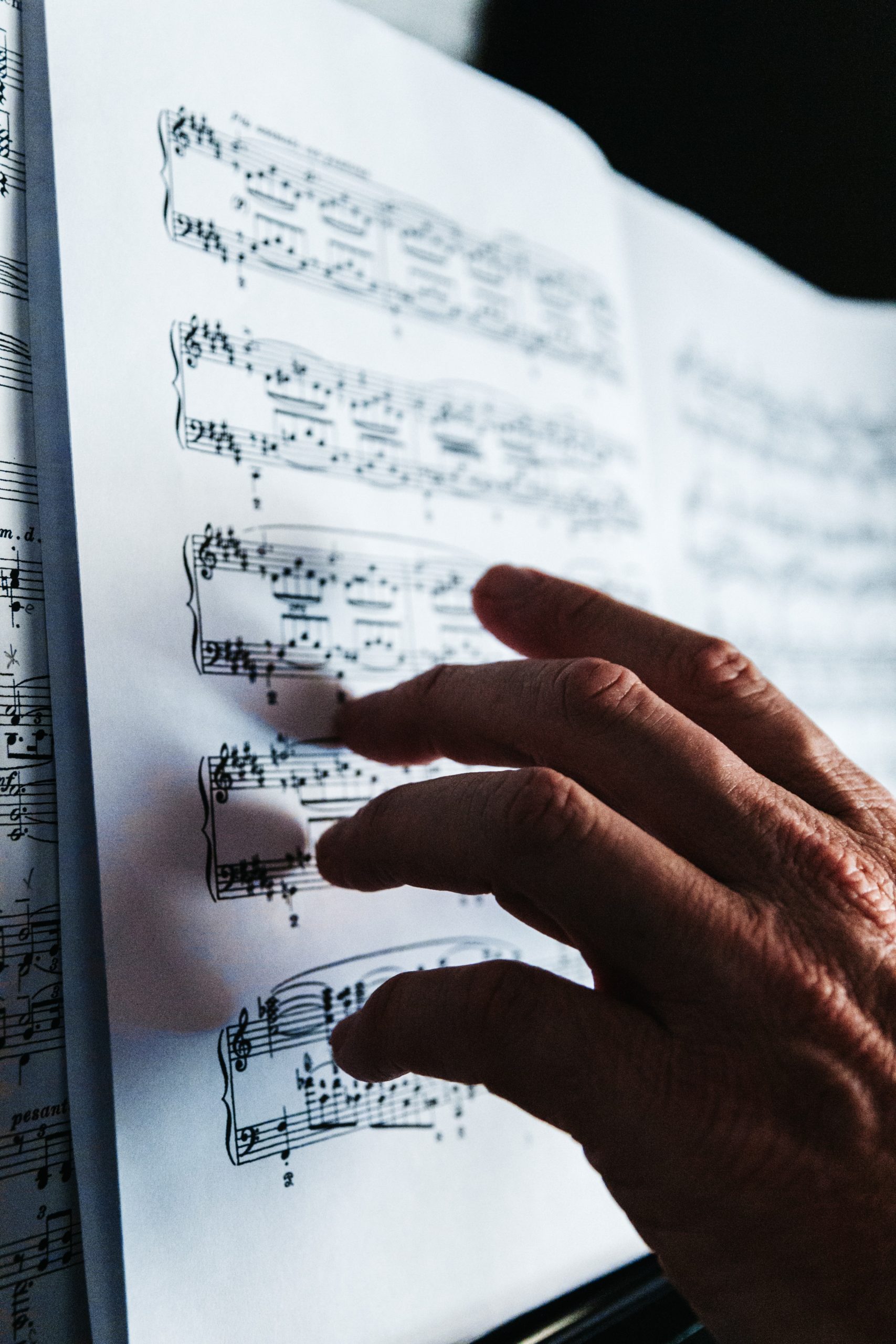
I would play the piano and sing a song that he was familiar with, he would nod and smile then hum some of the melody but could not sing the words.
Sometimes I would play different genres of music and let him vote on which pieces he liked best. There was one activity that he liked very much. I would bring a large easel and would set it up with a large pad of paper on it and a marker for him to draw with as I played different music. Sometimes I would have him draw how the music made him feel, other times I would have him draw lines up and down that matched the rise and fall of the music. Some pieces from Handel’s Messiah were excellent choices for that. I would choose the versions that were orchestral renditions only. In some pieces I would have him listen to rhythms and if there were a lot of 16th and 8th notes or staccato he would reflect his notations on the paper with dots or short strokes and when the music was more lagatto the strokes were smoother and longer. He came up with some interesting art pieces.
Giving the brain the opportunity to be exercised and stimulated on both sides can help to develop many unused areas.
The brain is an interesting organ and amazingly complex. Giving the brain the opportunity to be exercised and stimulated on both sides can help to develop many unused areas. Music is one of these exceptional ways of helping the brain heal.
My brother suggested that I try something which I was nervous and hesitant in doing but the more I thought about it I decided it was worth a try. I would sing a sentence and the man would slowly be able to sing it with me. If I would ask him to say the words he could not do that. I told him what my plan was and he was willing to give it a try. For weeks we practiced one sentence. We sang it many many times and finally one day we had a breakthrough. In amazement we both were stunned and decided that that day was when he could do what we had practiced for so long. We had his wife come into the room and I said her name…..then told her that her husband had something to say to her. She just looked at us both and said ok with a bit of hesitation in her voice. I nodded to him to go ahead. In a very labored but very distinctive voice he said “I love you…..” and said her name. She responded back with the same to him. Tears were in all of our eyes. I can’t even imagine being married for so many years, communicating on a daily basis having raised children together, going to work each day, to one day out of the blue to be struck at such a young age with a stroke and lose that ability to communicate with one another in an instant.
I learned so much from both of them through this experience and admire how they were able to find a way to help each other. A very loving couple indeed and I was the recipient of gaining so much from them.