I Need to do What?
That may have been my response when I was told that I would need to learn to play the guitar as part of my degree for Music Therapy.
Here I was in my mid-forties with a husband and 5 children, working part time, and going back to school full-time. For a moment I wondered to myself, “what are you thinking?” After realizing that there would be many things required of me to receive a degree in music therapy, I had to examine how badly I wanted this degree; I decided, I wanted it pretty bad, so I began the long arduous journey full of commitment and sacrifice.
I had friends asking me why I thought I had to take so many classes each semester?
They said, why don’t you just take one class at a time? I knew if I went on the slow track I would never reach my goal and the years that I would be able to practice would be shorter, so I made the decision to get to my end goal as quickly as possible. To this day, I am very pleased with that decision.
My father used to tell me (in regards to deciding if I should pursue something or not) you have to live those years anyway so you might as well be doing something that you love. Great advice…I’m glad I followed it. He also told me that if I ever worked outside of the home I should make sure I would love what I did. He said that he always loved his profession and was happy each day that he could get up and go to “work”, however it wasn’t work, it was what he loved doing. It brought him a lot of satisfaction.
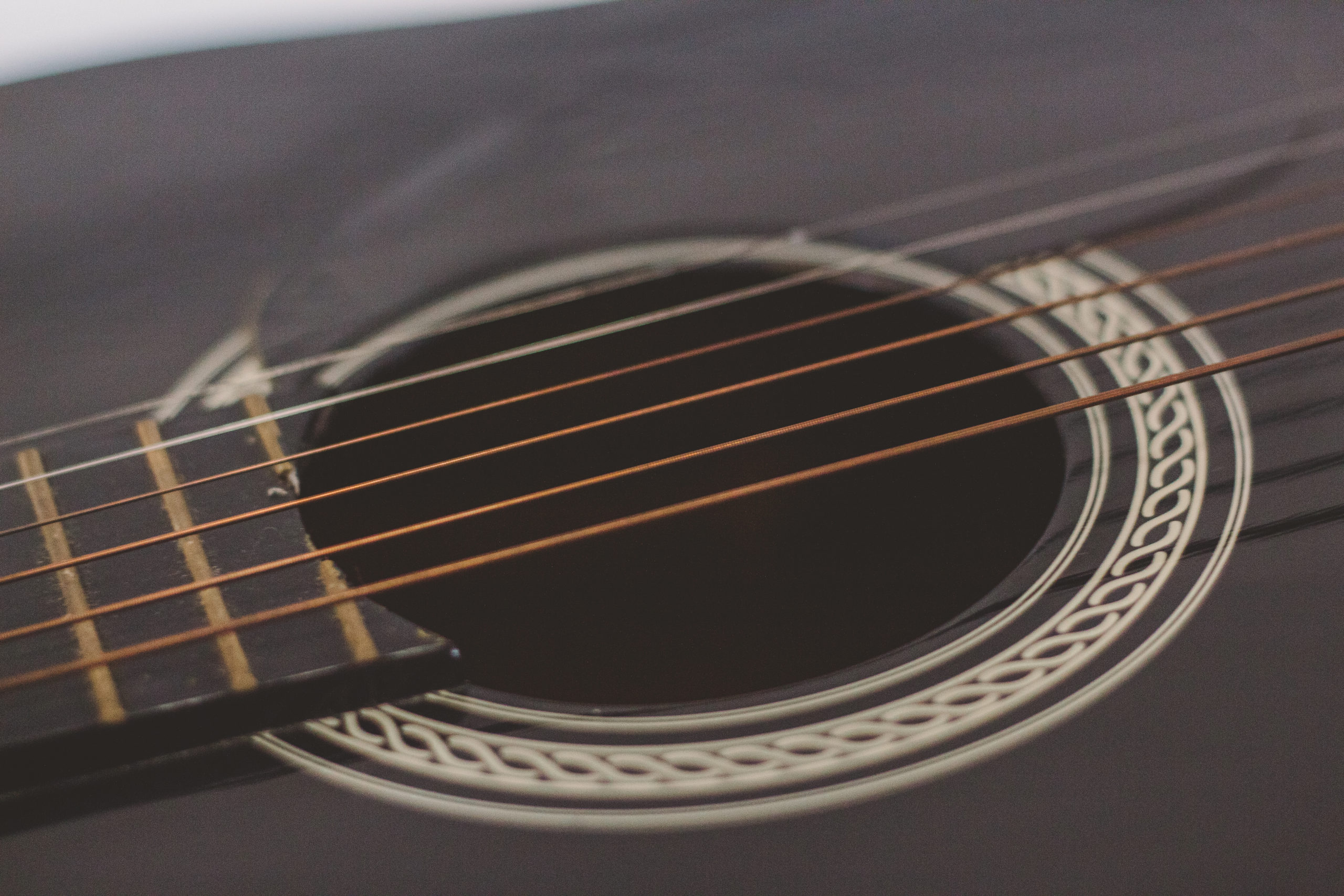
Thinking of the challenge ahead of me by learning to play various instruments I realized that playing the guitar was an instrument that was used by all music therapists. I learned there was a class offered at school, I knew the guitar would be easy to take to sessions and is an instrument that most people relate to so I decided to just jump in and learn how to use it.
At first, before I took the guitar class, I struggled trying to teach myself some chords. My son-in-law is an excellent guitarist so I asked him for some advice. He gave some great tips and worked with me to learn some basics. I wasn’t a fast learner but kept struggling along. I would talk to other students who were much quicker learning the chord skills to help me. One told me that if I were to get and practice on a baritone ukulele it would help me learn the chords. The baritone ukulele only has 4 strings as opposed to the 6 strings on a guitar. The four strings on the baritone uke are the same strings as the 4 higher strings of the guitar. It did help and I finally felt I was on my way.
During a summer session I took a guitar class and learned to play a little better. It was during that course that I learned if I could master 3-4 chords I could play many many songs, especially songs that I would play for children, (which was something I really enjoyed doing).
One of the students in my music therapy program would coach me through some practice sessions, which was very helpful. We did a practice activity over and over that really helped me improve and gain confidence on the uke and eventually the guitar. We would strum a chord 8 times, then change chords and play that second chord 8 times then change to a third chord and play it 8 times, then repeat the sequence starting with the first chord playing it 4 times moving on to the second chord playing it 4 times and ending with the third chord playing it 4 times, finally repeating the same format playing the chords 2 times each, then again 1 time each with the 3 chords. That was so helpful in learning to transition from one chord to another.
It wasn’t long before I put the uke down and felt comfortable playing the guitar. Adding the additional fingering to the guitars 6 strings made that transition much easier for me.
I’m not going to say that I’m a great guitarist because I am not, however I am very confident in what I do and enjoy the results from practicing and putting forth an effort to learn. I try not to compare my skills with those surrounding me that have mastered the skill to a higher level but continue using what I have learned and challenging myself to improve as I go along.
Looking back, all the worry and hard work I put into learning the guitar is nothing compared to the confidence and satisfaction I have experienced in the decades since. Not only was learning the guitar helpful to my career and success as a music therapist, it was also a huge confidence boost that helped me take on other challenges that would have seemed too daunting otherwise. Developing my Be Sharp Learn Through Music program would not have been possible without the skills and confidence I gained by learning the guitar those many years ago.
If you are afraid to jump in and learn the guitar, or any new skill, remember what my dad said, “you’re going to live those years anyway”. Trust yourself, take it on, find the help you need, and turn it into something you will love for decades.